The New 36-Team UCL Swiss Model: How Goal Differential Is Reshaping Table Mathematics
Emeka Okafor (Senior Analyst)
Football Journalism & Analytics
The Death of Dead Rubbers
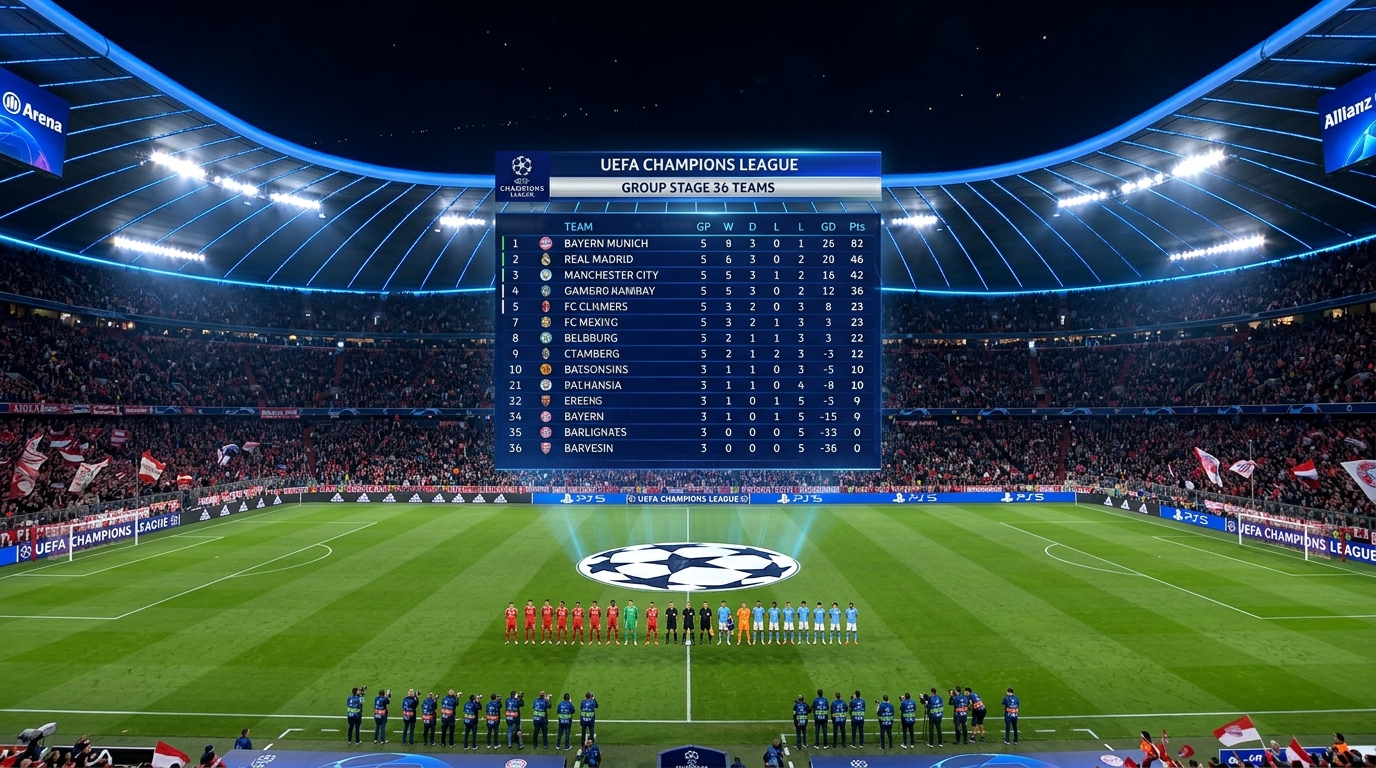
The introduction of the 36-team single-table Swiss Model has revolutionized the UEFA Champions League. In previous years, teams that secured qualification after Matchday 4 often fielded reserve sides in late group fixtures. Under the single-table format, every goal scored and conceded reverberates across the entire continent.
The Race for the Top 8 vs Playoff Spots (9–24)
Securing an automatic top-8 finish earns a direct bye into the Round of 16, avoiding two grueling February playoff matches against dangerous opposition. Consequently, managers can no longer afford to instruct their teams to "kill the game" at 2-0. Pushing for a 3rd or 4th goal directly impacts qualification seeding.
Statistical Shift in Matchday Dynamics
Analysts have documented a 14% surge in goals scored after the 80th minute compared to the old group stage format. With goal difference serving as the primary tiebreaker among clubs level on points, teams attack relentlessly until the final whistle.
Forecaster Strategy
In our Sportifem Max tier, European nights now prioritize late-game goal markets, Over 2.5 match lines, and Asian Goal lines rather than simple match winner selections.