Inter Milan vs Juventus (Derby d’Italia): 3-5-2 Positional Fluidity and Wing-Back Overloads
Emeka Okafor (Senior Analyst)
Football Journalism & Analytics
The Modern Derby d’Italia
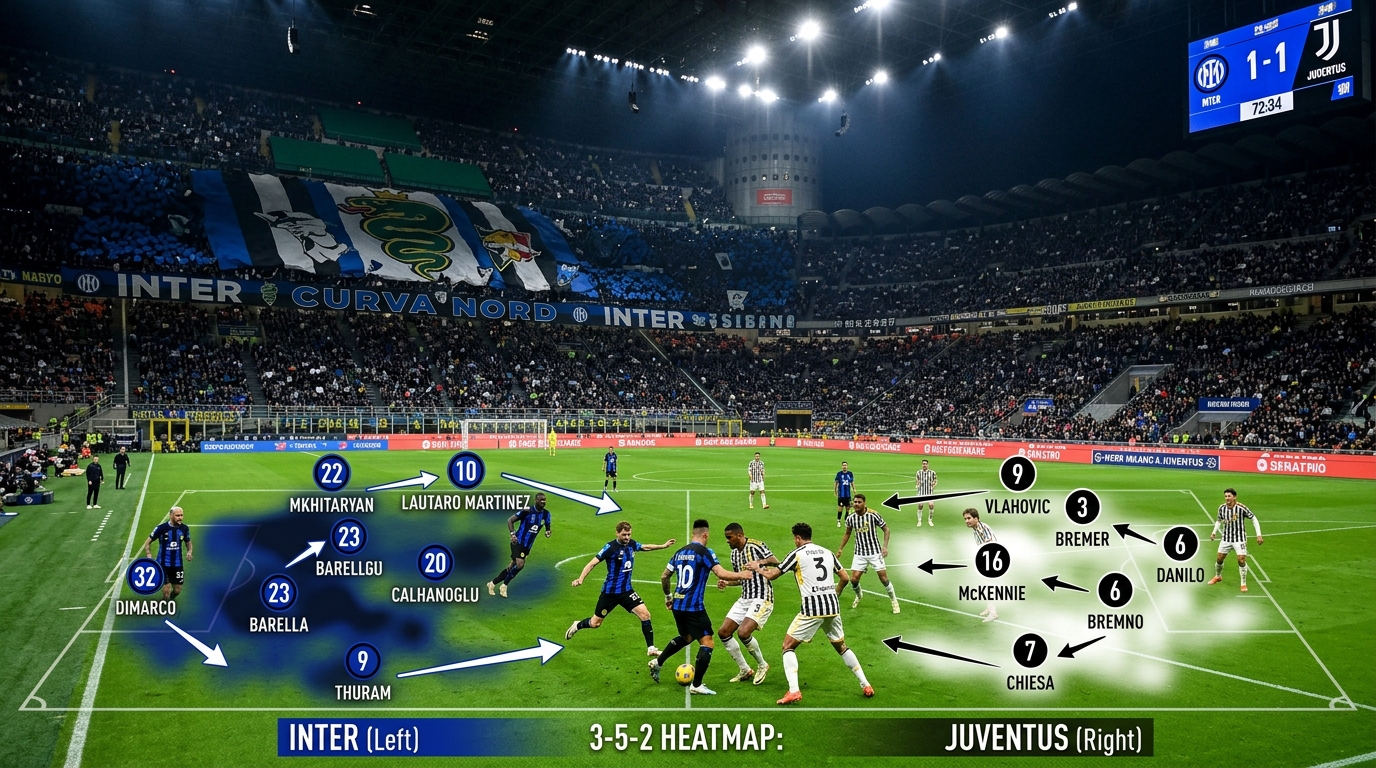
The Derby d’Italia between Inter Milan and Juventus has evolved from traditional defensive wars of attrition into one of Europe’s most sophisticated tactical chess matches. When both teams squared off at San Siro, the duel showcased modern 3-5-2 fluidity versus emerging positional pragmatism.
Inzaghi’s Overlapping Center-Backs
Simone Inzaghi has revolutionized the back-three system. In possession, Inter’s outside center-backs do not merely circulate the ball safely—they underlap and overlap into the final third. When Alessandro Bastoni advances into the inside-left channel, it creates a 3v2 numerical overload that forces opposing full-backs into impossible choices.
Juventus’s Defensive Compactness Under Motta
Thiago Motta countered this by shifting Juventus into a flexible 4-4-2 mid-block, screening the central passing lanes to Lautaro Martínez and baiting Inter into crossing from deep areas where Bremer and Danilo dominated aerial duels.
Tactical Summary for Sports Forecasters
Italian Serie A matches between top-four contenders remain tight, but the nature of chance creation has changed. Teams that generate cutbacks from wide overloads rather than hopeful crosses from the touchline produce significantly higher post-shot expected goal (PSxG) quality.